
How to Play OVERCHESS
Learn the pawn fantasy, the open board, and the army loop before you invent house rules.
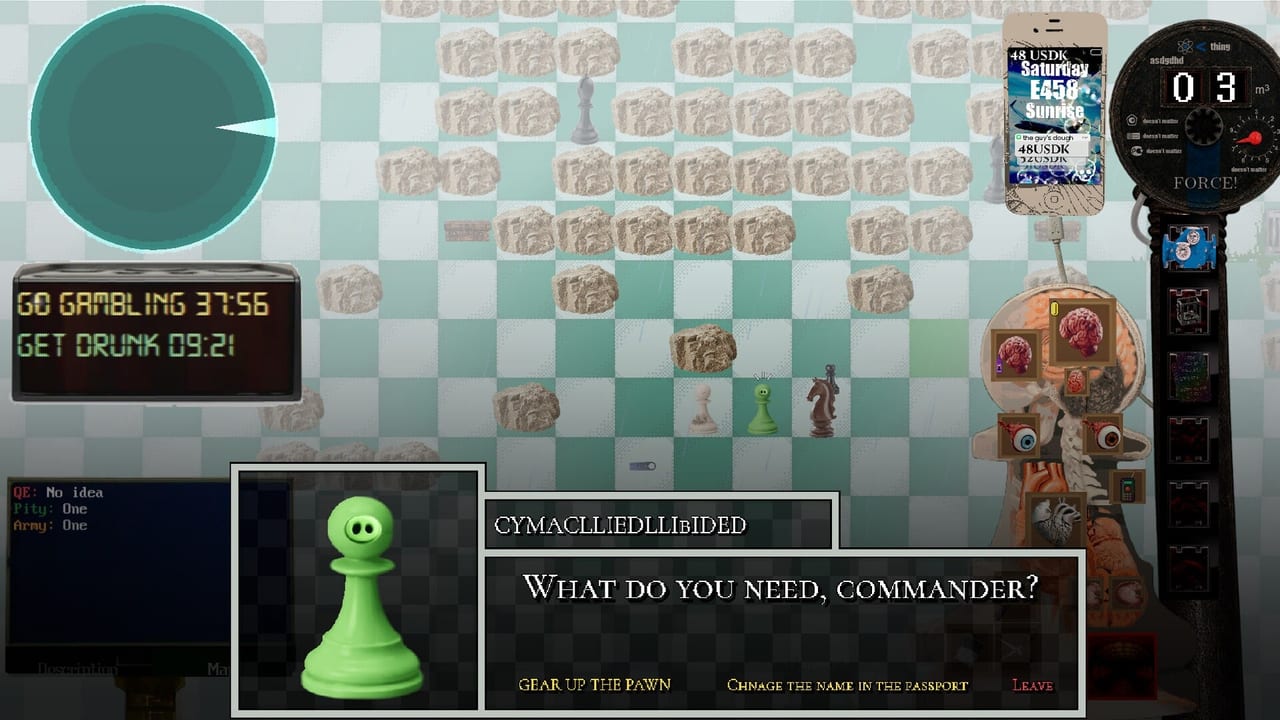
YOU KNOW HOW TO PLAY CHESS, RIGHT?? — that is the store’s opening jab. OVERCHESS is still chess-shaped, but it is also an open, multidimensional, sometimes horror-tinged adventure where a thinking pawn tries to cross absurd distances, modernize itself, and collect an army. This How to Play page teaches the public fantasy and the habits that make the Demo Guide smoother. It does not invent button prompts Steam never showed.
If you need install specs, read system requirements. If you need dated milestones, read News & Timeline. If you need recruitment theory, continue to Build Your Army and the Piece Tier List.
Core fantasy in one paragraph
You are a pawn alone against an endless, not-always-fair chess world. Pocket dimensions splinter the board. Strategy, adventure, and a bit of horror share the same joke. On the road you meet friends and enemies nobody expected — including vices, diseases, and crocodiles. You recruit, convert, and collect. You try to change fate. You might still die to a random quantum fluctuation. Got it???
Pillars to keep in mind
1. Single-player pace
OVERCHESS is marketed as single-player. There is no multiplayer obligation, no ranked ladder to farm tonight. Play at the speed of curiosity. The demo is for tasting systems, not for sweating a global leaderboard that does not exist in the pitch.
2. Distance and obsession
The long description’s “19 000 blocks” energy matters tonally: the pawn commits to a ridiculous trek. In play terms, set a session distance or milestone so you can judge progress even when the world is loud. Getting Started helps you pick a first-hour milestone.
3. Army as verb, not menu skin
Recruitment is the advertised verb set: befriend, oppose, enslave, collect worms. When the demo teaches a recruitment interaction, stop and note the UI verbs exactly. Do not assume traditional 4X city production.
4. Hazard literacy
Diseases, wildlife, addiction themes, and quantum bad luck are part of the advertised threat diet. Learning how to leave a bad pocket dimension is as important as learning how to enter one.
5. Modernization
The pawn can “modernize.” Treat early upgrade choices as experiments. Record what changed in combat or traversal before stacking every shiny option.
Suggested first-session loop
- Launch from Steam (demo app 5606670 when available).
- Finish any forced tutorial beats without skipping readability.
- Move until the open board feels legible — camera, selection, cancel.
- Complete one recruitment of any kind (friend preferred).
- Survive one hazard tease without greed-wiping.
- Quit on a win condition you chose (blocks traveled, recruit secured, dimension exited).
- Write three bullets; only then open Discord theories.
Chess knowledge: help or trap?
Knowing classical chess helps you recognize piece silhouettes and board metaphors. It can also trap you into expecting FIDE rules in every pocket dimension. OVERCHESS markets excessive and multidimensional chess — assume variants, jokes, and horror exceptions. When the game contradicts classical movement, trust the game.
Combat and encounters (pre-systems)
Without a public combat manual, use observational play:
- Watch enemy wind-ups twice before you invent a counter-guide.
- Separate “story scary” from “mechanical lethal.”
- If army pieces act automatically, learn their leash range before you kite into alligators.
- If you command pieces directly, practice canceling orders — misclicks in excessive chess are lore-accurate but still annoying.
Exploration hygiene
Pocket dimensions sound like voluntary dungeons glued to a chess plane. Mark landmarks mentally. Avoid opening three unknown doors when your army is already limping. The store even teases “unnecessary decisions” as a failure mode — sometimes the skillful play is declining content.
Meta habits that improve every run
- Wishlist the full game on Steam so you catch the 2026 launch.
- Follow Official Links for Discord and X rather than random reshares.
- Recheck Updates after major Steam news.
- Keep expectations labeled: this How to Play page will deepen when UI screenshots and patch notes exist.
Common new-player mistakes (predicted)
- Treating the trailer joke tone as proof that nothing can hurt you.
- Ignoring diseases because the quantum line says you die anyway — both can be true; still play around avoidable damage.
- Building only slaves on run one and deciding the whole game is that fantasy.
- Skipping system requirements on a 4 GB machine with thirty Chrome tabs.
- Demanding a codes page — there is not one to invent.
Where to go next
- Demo Guide — time-boxed plan
- Build Your Army — recruitment routes
- Guides Hub — full tutorial index
- Piece Tier List — what to watch for
Learn the joke, respect the hazards, and let the pawn’s brain modernize at a humane pace.
Frequently Asked Questions
Quick answers about OVERCHESS, the demo, and this wiki.
Do I need to be good at classical chess to play OVERCHESS?
No. Classical knowledge helps with metaphors, but the game advertises excessive multidimensional chess with its own jokes and rules. Trust in-game teaching over FIDE assumptions.
Is OVERCHESS multiplayer?
Public Steam positioning highlighted for this wiki is single-player. Do not expect ranked multiplayer features unless official store tags change.
What should I do in my first hour?
Finish tutorial beats, secure one recruit if possible, travel a milestone you chose, and take notes. Use the Demo Guide for a stricter checklist.
Where are the controls listed?
Use in-game prompts first. This page stays systems-honest pre-release; Getting Started and future controls notes will expand when stable bindings are public.